The test says…… please what does it mean
HBsAg positive
HBsAb negative
HBeAg negative
HBeAb positive
HBcAb negative
The test says…… please what does it mean
HBsAg positive
HBsAb negative
HBeAg negative
HBeAb positive
HBcAb negative
Hi @ anonymous 74
From the Hepatitis B profiles , this patient has antiHBc -ve . There may be 4 possibilities 1) If this is the total anti HBc (IgG and IgM)
It means that this patient had no exposure to HBV and HBsAg should be - ve , so this condition is unlikely possible.
2) antiHBc Ig M -ve and Total antiHBc +ve , this mean that this patient has chronic HBV infection with HBeAg seroconversion (inactive)
3) If this is total anti HBc -ve , it may be detected in early acute HBV infection, however, HBeAg result should be positive
4) False negative result of anti HBc which is rarely occurs due to body immune response to structural core Ag protein of HBV usually gives lifelong immunity. So, I think that you should repeat antiHBc test for confirmation.
chul_chan
Chulapong Chanta. MD. Pediatrics
Chiangrai hospital. Thailand.
@chul_chan thank you so much….
dear @ThomasTu , @availlant
I want to ask for you help to interpret my result ,
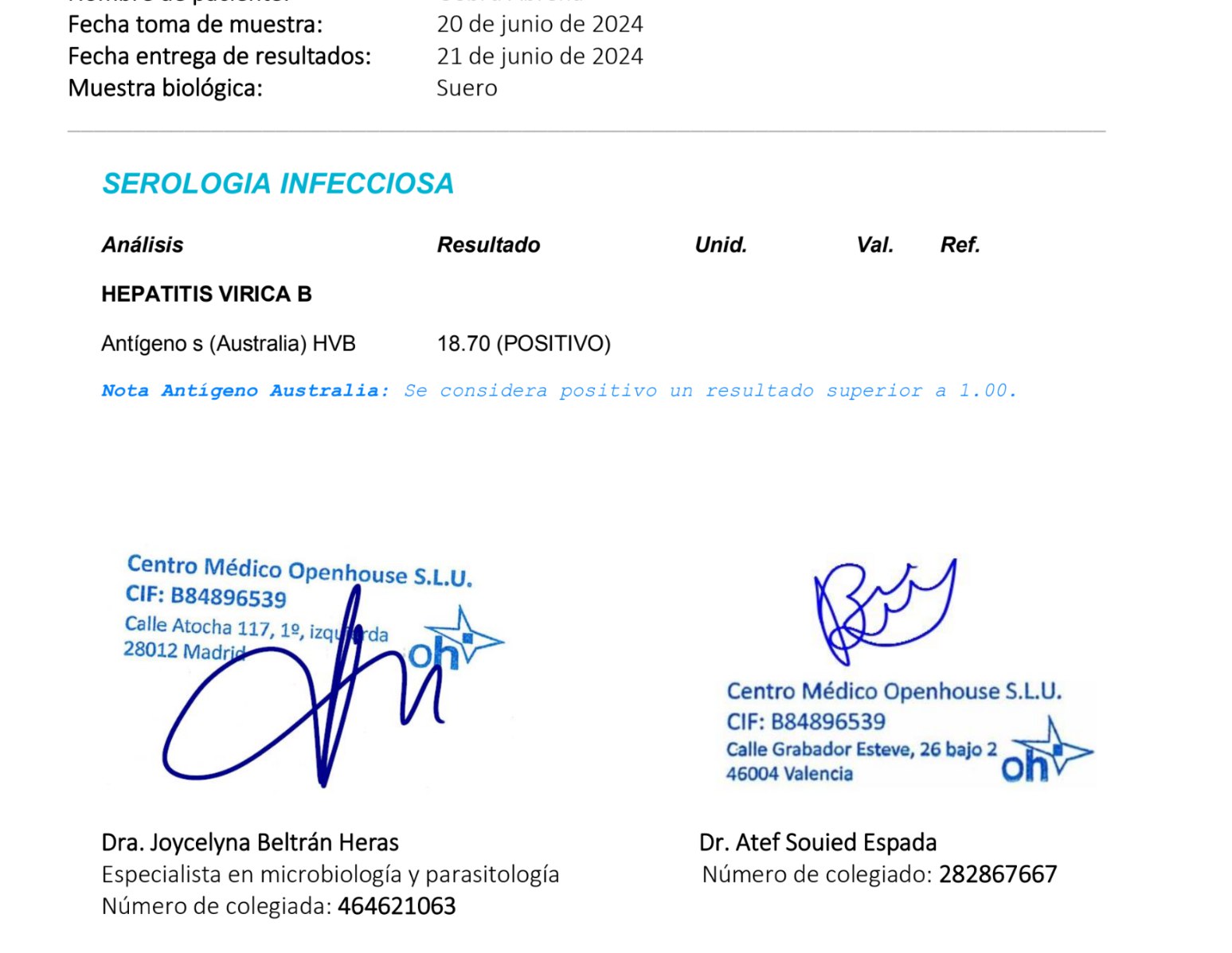
before 2 or 3 month, after high inflammation i transfer from HBeAg positive to negative and my HBV DNA was 26500 and HBsAg was 18.7 (i ask this to check the quantity), but now when i did i got this result why my hbsag go up rapidly ? i guess it is quantity of hbsga
the second test
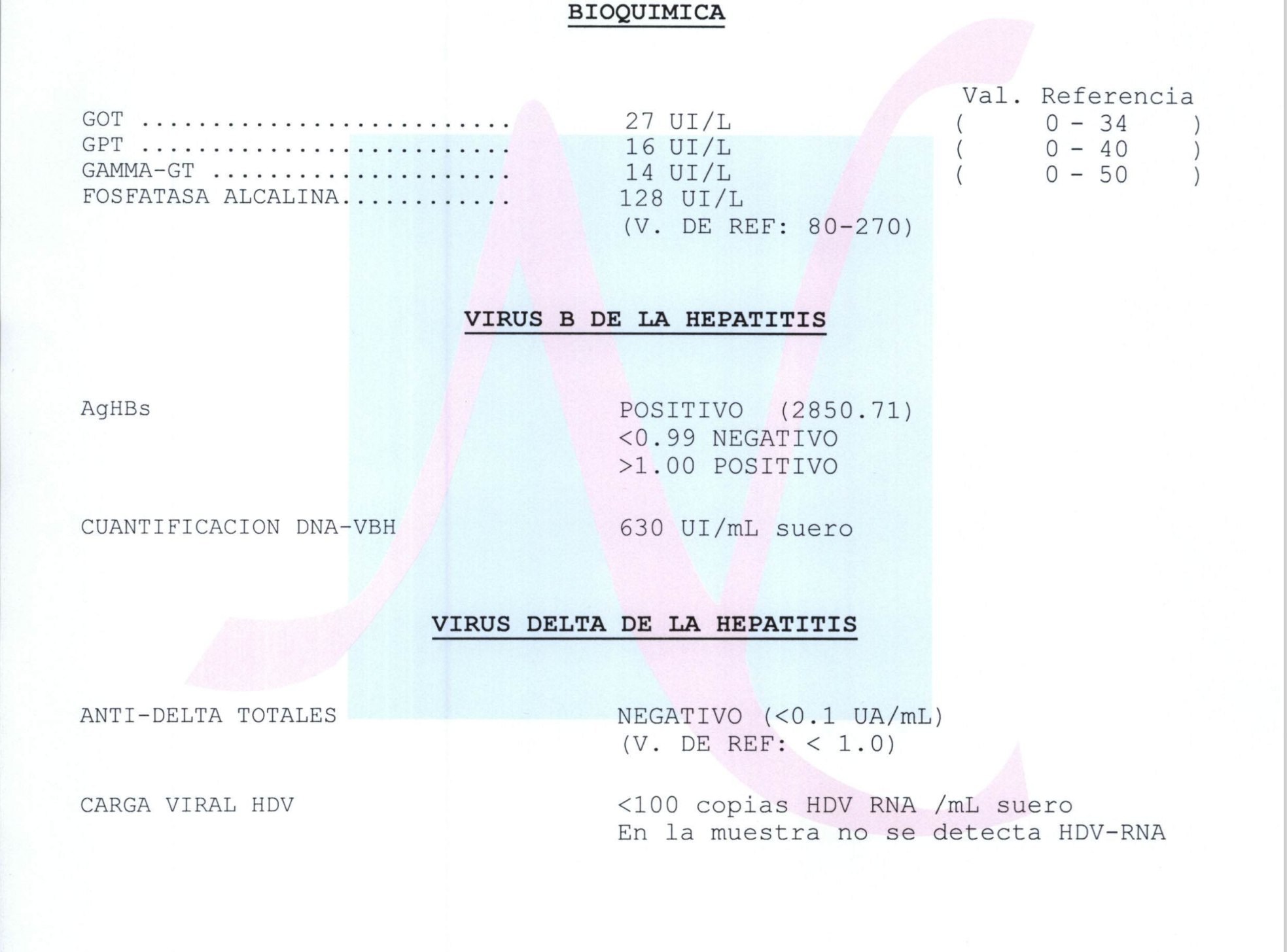
can it be measured by S/CO ?? i mean when we test qualitative test (S/CO) can we get this amount of big number ?? what i am sure is 18.7 is quantity what i asked strictly , but incase of 2850 i do no what is measured quantity or quality .
Dear @lemlem,
Both of your HBsAg tests appear to be QUALITATIVE. This means that they can only tell you if HBsAg is present or not. The numerical value reported is not a direct measure of the amount of HBsAg present but simply the ratio between a control sample (with no HBsAg) (cutoff) and your sample (signal). If your sample returns the same signal as the control sample than the ratio is zero, which is the threshold for negativity.
In reality, although the signal:cutoff (S/CO) ratio has changed a lot in your case, this does not mean a large change in HBsAg. To understand the true changes in your HBsAg
Is this test kit sold in clinics for private testing???
If yes,then I need one
Dear @availlant @ThomasTu
I ask both labratory i got confirmation
First test hbv dna 26500 and hbsag 18.7 quanititatve as per the lab response i am not sure if i understand well.
Second test hbv dna 650 and hbsag is only qualitative or 2850 S/co as per their confirmation
Best regards
Dear @lemlem,
Unfortunately, the responses you have received are contradictory so it is difficult to assess what kind of test was used for the first result.
For sure the second test is qualitative since it reports S/Co.
The quantitative HBsAg test is never reported as an index and always reported with defined units (IU/mL). The qualitative test is always reported as S/Co (like your second result).
Now even if the first test is quantitative (and not reported properly) and the second is qualitative, we cannot really know if there is a any meaningful change in HBsAg and in any case you should not be worried.
When you are on NUC therapy, what is important is that your HBV DNA remains very low or undetectable and your ALT remains normal. These are the results that ensure that liver disease will never progress.
Well noted @availlant ,
thank you very much
Greetings to you all! I need support from anyone who can help as I navigate my chronic hepatitis B condition. I was diagnosed with hepatitis B a year and a half ago during a visit to a local clinic for another illness. I had some slight pain in the upper right side of my abdomen, and the doctor discovered the infection but didn’t inform me at that time; it was only noted in my medical history.
Just two days ago, during a follow-up visit for another issue, a different doctor revealed my hepatitis B diagnosis, confirming that it is chronic. I was shocked to learn this! The doctor advised me to return in six months, but I am deeply stressed and worried about what this means for my health. I don’t have detailed knowledge about the disease and am concerned about how long I can live with this condition.
Please help me with any information or support you can offer!
Welcome @kidusem
You can live a normal long life if you look after your body.
I’ve had HBV for 40 years.
I eat healthy get monitored, blood test and ultrasound every 6 months.
It’s important to have those tests because there’s usually no symptoms of liver damage and it’s important to get onto treatment as soon as damage is detected.
Treatment is usually one tablet a day. I’ve been on treatment for about eight years. No major side-effects.
It’s great you have found this forum. Have a read of some of the posts to get an idea of what you’re dealing with.
I suppose the doctor didn’t give you any information on the condition of your liver?
Sorry I have taken so long to respond.
@Bansah1 @ThomasTu
Blessings
Thank you for your help, Caraline. I’m grateful for this information, as it may help lessen my stress. The doctor informed me that I have chronic hepatitis B but didn’t provide details about my liver status; I have a follow-up appointment in six months.
I need to know whether this result could be incorrect and if I should seek a second opinion. Additionally, what type of tests should I undergo to assess my liver status and determine if I should start treatment? I’ve read that hepatitis B patients are advised to get vaccinated for hepatitis A, but I’m not sure if this is a recommended measure.
I have a wife and two children. My wife was just diagnosed with hepatitis B, but her test result came back negative. She had prenatal follow-ups for both children, who have received vaccinations. I’m concerned about whether my wife’s diagnosis might be incorrect or if it’s possible she hasn’t contracted the virus after five years of marriage. I’m also uncertain whether my children should be tested.
I’m trying to gather information on the next steps I should take. I feel fortunate to be part of this group, and I greatly appreciate your support. Your guidance means a lot to me, especially since health services are limited in my area. I look forward to your continued assistance.
Hi @kidusem,
Welcome to the community. If I understand you well, you first got a diagnosis about 1.6 years ago. You were made aware in the past about this, and you recently got a different doctor to tell you about your diagnosis again, right? Please, take such things seriously even if the information is not what we want to hear.
We all did not want to hear about our diagnosis initially, until we realized the danger of our inaction. Please, try and find a provider that treats hepatitis B patients and follow-up so you can get a clear picture of where you are. You can get your wife tested again if the first test does not look right. False positives and negatives can happen, so get her tested again. If she is negative, let her get vaccinated. I am glad to hear that your children are already vaccinated.
Many people have this virus, but because they are not sick or have any symptoms they are not aware they have it, then they get a surprise diagnosis when they least expect it. That is the story of most HBV patients. Follow-up with your doctor, and take care of yourself. Even though there is no cure for HBV, it can be managed. Don’t lose hope or give up. Continue to live. I hope this helps, Bansah1
Thank you for your help, Bansah 1. I was not informed about my diagnosis at first. The diagnosis was made about a year and a half ago, but the doctor did not make me aware of it. Instead, he told me that I had a kidney stone. However, he did write the test result for hepatitis B in my medical record. It was only when I visited the same clinic for a different issue—slight back pain—that another doctor asked me, “Are you taking care of the hepatitis case?” This was completely new information for me. Just this week, I learned that I have chronic hepatitis B.
I appreciate you support!
Oh, okay. Thanks for the correction. That is bad that the other doctor never mentioned this to you. How are you feeling? Angry, disappointed, shocked, lost of words, feeling alone and guilty, etc. These are all normal reactions. I hope you’re will be able to follow up with the doctor and understand where things stand for you. Keep us posted. Bansah1
Can you explain that a bit more? I’ve always been confused by those statistics. The say that if someone doesn’t have the vaccine and are an adult, after exposure only about 5% will go on to develop chronic HBV. Isn’t that the same stats as the vaccine? Or is it that the 5% that would normally develop chronic HBV, that only 5% of them will develop it if they are vaccinated?
I also struggle with the idea that HBV doesn’t spread casually, yet it spreads within households easily enough it seems. Isn’t that contradictory? Thx.
Hi @Stargazer6138,
Welcome to the community. I am not sure I understand your question especially about the vaccine. The majority of people who get the vaccine develop immunity, I am not sure where you are getting the 5% from. There are a few instances where someone will get vaccinated and not develop immunity, such as if they have HIV, already infected with HBV, immune suppressed due to cancer or medications that suppress the immune system. With the infection from acute to chronic in adulthood, about 90% do not develop chronic infection. But there are about 5-10% of people who will develop chronic infection for some other reasons. The opposite is true for children where 5-10% don’t develop chronic infection but 90% do.
HBV is not known to spread casually. I have lived with a roommate for 8 years, we share the kitchen, knives, utensils, etc. but he does not have HBV. The spread in households is commonly through birth and other means rather than casually. I have 4 other siblings who are infected from my family and we all got it through birth. This point is not contradictory, because it does not spread casually. I hope this helps clarify things for you. Best, Bansah1
Thanks for the reply.
" HB vaccine is 95% to 100% effective pre-exposure"
When you look at vaccine stats, it always says 95 - 100%. So the 5% comes from there.
Is your roommate vaccinated? Then I can see it not spreading casually. I’m considering the scenario where the roommate isn’t vaccinated though. Because when you read research papers, it seems to spread within households eventually. Where I am from, living with someone with Hep B is considered “high risk” which is why I’m confused.
Thanks!
Sure, I mentioned some instances where some people might not develop immunity, but the majority of people do. Plus when it comes to vaccine, I doubt we have any that is 100%. A range of 95-100% is better.
Living with someone with hepatitis B is not risky if you understand how the virus spreads and protect yourself. I don’t do anything that could expose others. HBV patients are smart and do everything to protect others. If you are not vaccinated, please do so. Some communities out of lack of knowledge about HBV and how it’s spread, creates situations that are not backed by any science. The scientific evidence shows HBV does not spread casually like a common cold or flu or even a cough. One has to come into contact with an infected blood. And I don’t think people walk around daily in our households with blood on their bodies, or do they?
The chances of someone vaccinated getting HBV is almost 0. The reason we encourage people to get vaccinated. That is the best prevention method.
If the infected roommate doesn’t leave blood anywhere or is not a sexual partner, the unvaccinated individual has a less chance of getting infected. There has to be a blood exchange or contact. Could someone be careless, sure off course but that is not the norm. My roommate got vaccinated later on when I found out about my status. But we lived many years without me being aware I had it. I have lived with other roommates in the past and I wasn’t aware about my status at those times either. If it spreads casually all these people I have lived with should be infected, but none is because there was no blood contact and they were not my sexual partners either. I hope this provides more context. Please get vaccinated if you have not done so already, the 5% should not be the reason why you should not get vaccinated.
Best, Bansah1.
Thanks. I actually was vaccinated in 2004, but I’m confused because I think I just tested positive. I say “I think” because I live in a place where positive STI results aren’t visible, but negative ones are. So I can see all the things I’m negative for, but for Hepatitis B, only my surface antibodies are showing and not the other ones (like surface Antigen), which leads me to believe it was a positive test.
I donated blood from 2015-2017, and those were all accepted, so I don’t think it’s possible I had hep b then. My last sexual encounter was six years ago. I tested negative in December, and again in February, but in June this one looks like it’s positive, so I don’t understand. Did my vaccine fail, or is my immune system suppressed or something? Need to see my doctor I guess.
Thanks for your information though, very helpful.